

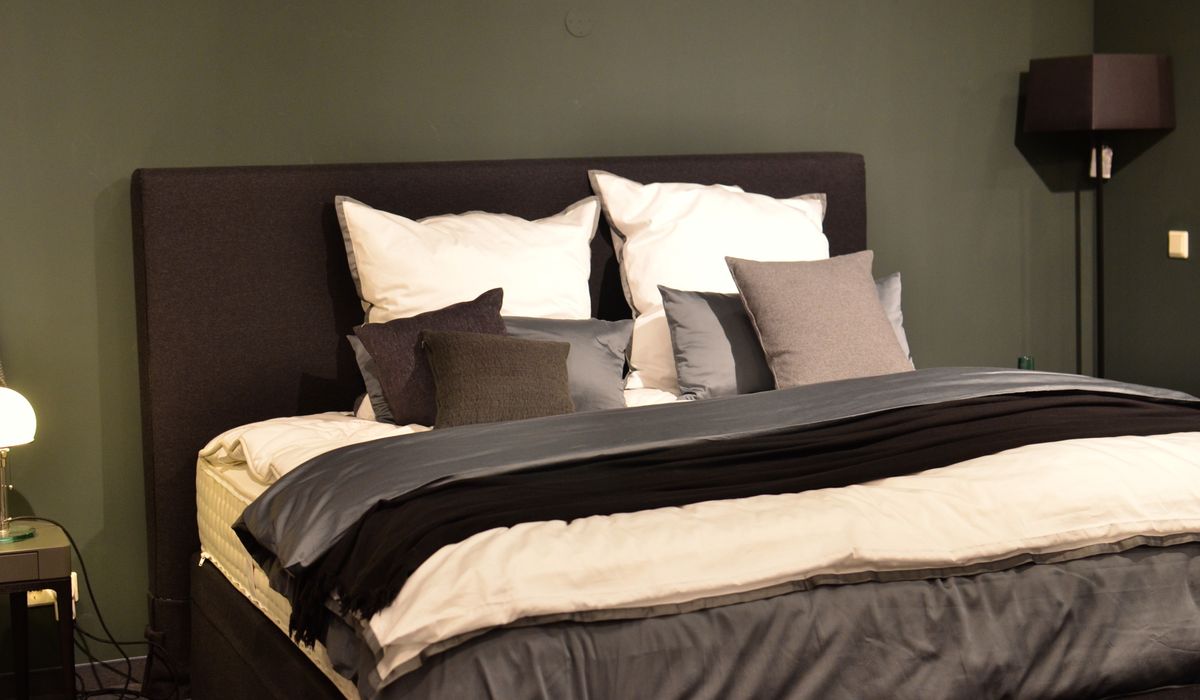
Why one bright ceiling light can leave a room feeling cold
A single pendant in the middle of the ceiling does a brilliant job of lighting a room for cleaning, paperwork and finding a lost earring. It is far less good at making you want to sit in the room at nine in the evening. Ceiling light falls from above, so it flattens faces, throws shadows under furniture and leaves the corners of the room dim while the middle glows. That contrast is what makes a living room feel chilly, even when the heating is on.
Floor lamps fix this by putting light where you actually are. Standing light at roughly seated eye level, and often a little below it, mimics the lamps, candles and fires our eyes instinctively read as warm. Swap the ceiling light off after dinner, switch on two floor lamps, and the same room will feel softer, smaller and noticeably more inviting — usually for less electricity than running one big fitting.
Start with the reading corner, not the whole room
Rather than buying a floor lamp and then hunting for somewhere to put it, pick the spot first. Every living room has a natural corner: the chair by the window, the end of the sofa nearest the fireplace, the alcove beside the chimney breast. That corner is your anchor, and the lamp exists to serve it.
Aim for the shade to sit just above your eyeline when you are sitting down — around 1.2 metres from the floor for most British sofas, which tend to sit lower than their American cousins. Too low and the shade cuts through your view; too high and you get glare across the room and a pool of light on the floor instead of on your book or newspaper.
Then think about where the light lands. A lamp placed beside and slightly behind your shoulder sends light forward onto the page without shining in your eyes. A lamp directly in front of you, on the other hand, will reflect off the paper and leave you squinting.
Getting the height, shade and spread right
The shape of the shade matters as much as the height of the stand. A few rules of thumb worth knowing before you shop:
- Drum and empire shades push light up and down, which is flattering for a seated area but can create a bright band on the ceiling. A diffuser cap on top softens this considerably.
- Deep, tapered shades concentrate light downwards onto a chair or side table — ideal for reading, less useful for general ambience.
- Adjustable arms and gooseneck designs let you change the direction of the beam without moving the base, handy in rented flats where you cannot fix anything to the wall.
- Arc lamps are made for bay windows and low sofas. They reach over a seating area without stealing floor space, but they need a heavy base and a decent clearance from the ceiling.
- Tripod and open-frame bases feel lighter in small rooms and let you see more of the floor, which makes a compact living room feel bigger.
Measure the room before you buy, and measure the base as well as the height. A 40cm base looks generous in a shop and cramped between a sofa and a wall.
Bulbs: the single biggest upgrade you can make
You can spend a fortune on a beautiful lamp and undo it with the wrong bulb. Look for warm white light in the region of 2700K to 3000K. Anything at 4000K or above will read as cold and clinical, which is exactly the effect you are trying to avoid. Many people find a dimmable 2200K–2400K filament bulb in a warm amber tone the most flattering of all for evening use.
Ignore wattage and read lumens instead. A floor lamp used for reading wants roughly 600 to 800 lumens; a lamp used purely for atmosphere can sit happily at 300 to 400. Make sure the fitting matches the bulb — E27 screw and B22 bayonet are the two you will meet in British homes, and the box almost always states which.
If you can, choose a dimmable bulb and add a foot dimmer or a smart plug. Being able to drop the light from bright to low without getting up is the difference between a lamp you use every evening and one you stop bothering with.
A practical buying checklist for British homes
Rooms here are often smaller, ceilings lower and sockets fewer than the showroom photographs suggest. A short checklist saves a return trip:
- Cable length. Two metres is a sensible minimum. Older terraces and flats frequently have sockets in awkward places, and an extension lead trailing across a doorway is a trip hazard.
- Switch position. An inline foot switch is far more useful beside a sofa than a switch hidden under the shade.
- Base weight. In a house with pets, children or a busy vacuuming routine, a heavy or weighted base is worth the extra cost.
- Ceiling height. In a room with a 2.3-metre ceiling, a 1.6-metre floor lamp will dominate. Consider a slimmer design or a table lamp on a tall side table instead.
- Scale. A lamp should feel like part of the furniture, not a spare. If in doubt, go one size larger than you think; undersized lamps make a room look unfinished.
Layering floor lamps with the rest of the room
The most comfortable living rooms rarely rely on one fitting. Aim for at least three light sources at different heights: a floor lamp by the reading chair, a smaller table lamp on a side table or windowsill, and a gentle glow from the ceiling or a wall light on a dimmer. Two floor lamps placed symmetrically behind a sofa, angled inwards, can light a whole seating area on their own without a ceiling light at all.
Keep the colour temperature consistent across every lamp in the room. Mixing a warm bulb in one corner with a cool one in another creates a subtle clash that is hard to name but easy to feel. Once everything is switched on, walk around the room, sit in your usual spot, and check for glare, hot spots and dark corners. Move a lamp 30cm in any direction and the whole scheme can change — so experiment before you commit to a final position.




John Doe
14 January, 2022Having no content in post should have adverse..
Chauffina Carr
10 April, 2022We use these tests all time! Killer stuff!
Jim Séchen
16 July, 2022Thanks for all the comments, everyone!